Why We Started a Folk School
While preparing the business plan for the farm. The Folk School began as an ongoing conversation.
Over the past year, Michelle, our Agritourism Manager, and I have spent countless hours talking about the future of The Heritage Farm and the kinds of experiences we wanted to create here. Again and again, our conversations returned to the same themes: traditional skills, craftsmanship, heritage, self-reliance, storytelling, and a desire to preserve things that feel increasingly rare in today's world.
In many ways, the Folk School was hiding inside The Heritage Farm long before we realized it.
After all, I chose the name The Heritage Farm very intentionally. My vision has always extended beyond raising animals or hosting events. I wanted to create a place that celebrates heritage in all its forms, heritage livestock breeds, traditional craftsmanship, folk traditions, folks arts, music, storytelling, artisan trades, and the practical skills that once shaped everyday life.
Even our children's programs reflect that philosophy. We call them Little Folks because the word itself carries forward a piece of Southern culture and language that feels familiar, welcoming, and worth preserving.
As our conversations about classes continued, something unexpected happened. What began as ideas for a handful of workshops slowly evolved into something much larger. We realized we weren't simply planning classes.
We were building a place for knowledge to be shared.
A place for traditions to be practiced.
A place for skills to be carried forward.
And eventually, that vision became The Folk School.
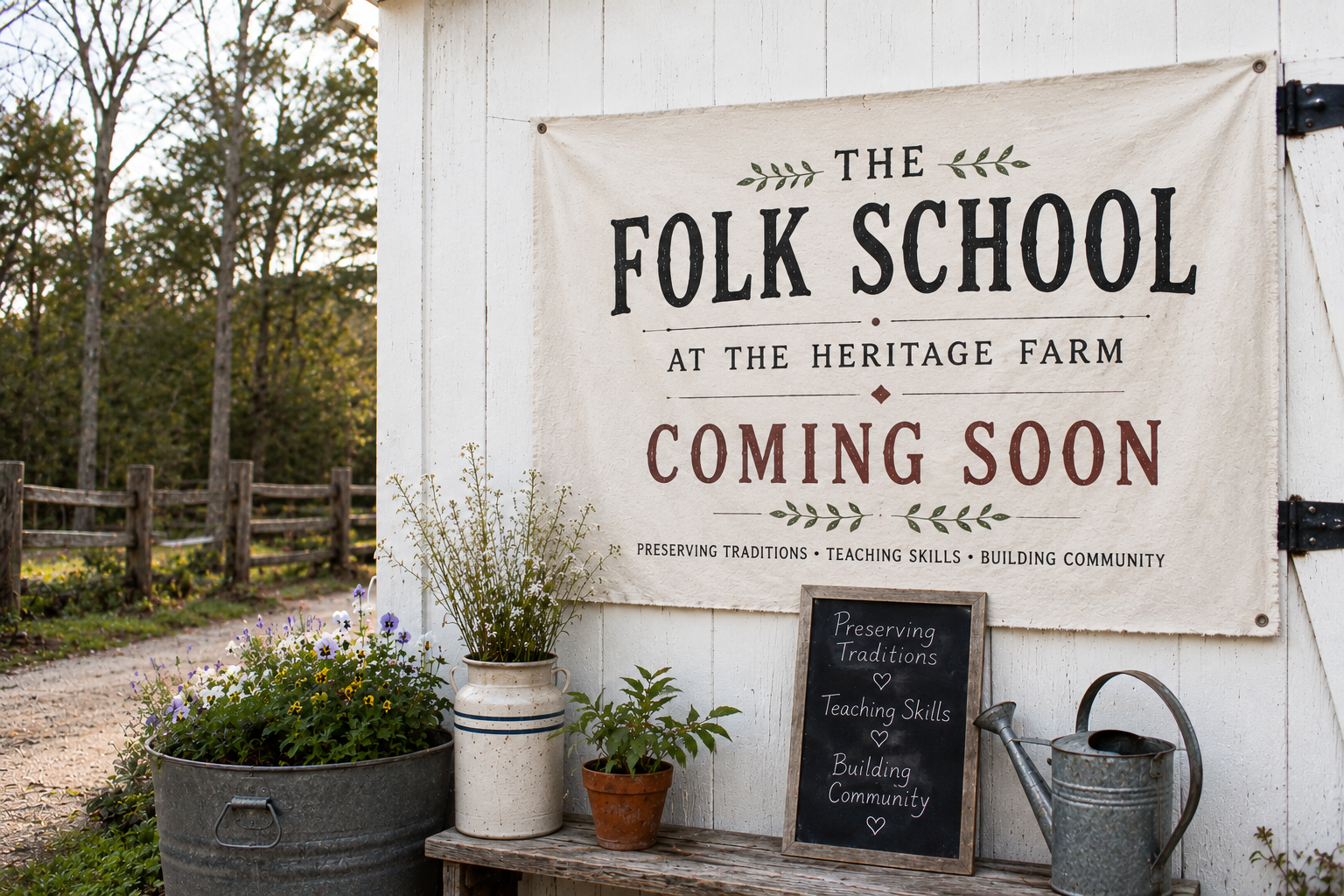
Expected to be completed in August 2026, this building will serve as home to our farm offices, Heritage Market, and Folk School classroom space. What began as a vision is quickly becoming a reality, and we're excited to watch it take shape.
Yes, it started with a vision. But it also started with countless hours of planning, budgeting, spreadsheets, market research, site visits, researching instructors, business plans, site layouts, instructor recruitment, and figuring out how to build something that could not only survive, but thrive for years to come. Because I believe this matters. I have a deep appreciation for traditional skills, heritage crafts, artisan trades, folk traditions, primitive skills, homesteading knowledge, heritage livestock, storytelling, music, and the countless practical skills that once formed the foundation of everyday life.
The older I get, the more I realize how much knowledge has quietly disappeared within just a few generations.
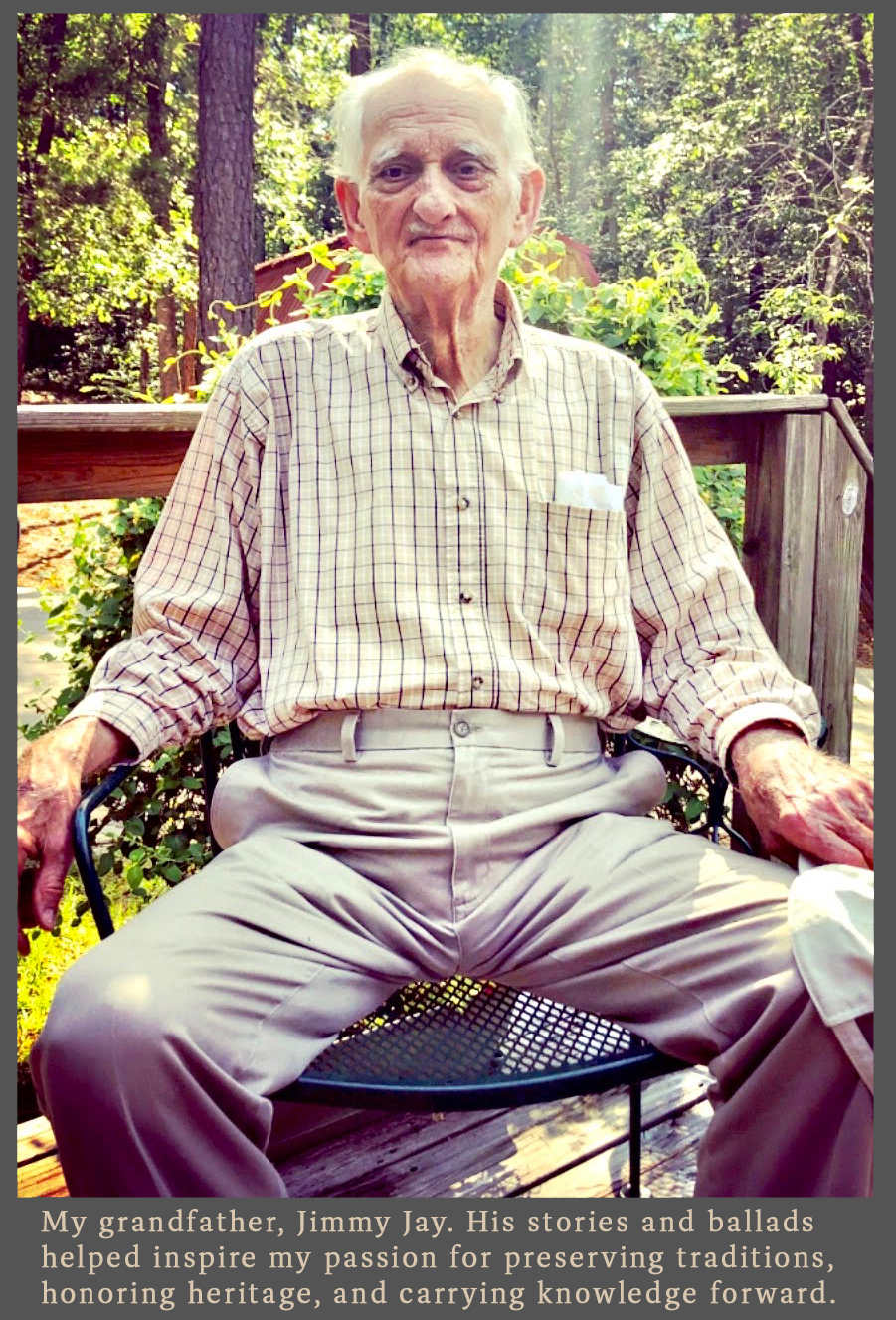
Our great-grandparents carried an incredible amount of knowledge. They knew how to preserve food, mend clothing, raise animals, build things, make things, repair things, and create beauty with their hands. They knew songs and stories that had been passed down for generations. They possessed skills that were woven into daily life, not because they were hobbies, but because they were essential. Today, much of that knowledge is fading. Not because it lacks value, but because fewer and fewer people are carrying it forward. That realization has stayed with me. Some of my favorite childhood memories are of my grandfather tending to his beees, playing his violin or reciting long ballads and poems that had been passed down through generations before him.
At the time, I never imagined they might someday disappear. I certainly never thought to record these special moments. I wish I had. regret taught me something important.
Traditions do not survive on their own. Skills do not survive on their own. Stories do not survive on their own. Someone has to value them enough to learn them, practice them, teach them, and pass them on.
That is what The Folk School is about.
Creating a place where people can gather around shared interests and shared heritage. A place where blacksmiths, herbalists, basket weavers, naturalists, musicians, storytellers, homesteaders, craftsmen, artists, and tradition keepers can share what they know with others who are eager to learn. A place where knowledge is not only preserved, but actively lived.
I often joke that I want to take every class we offer myself, but it's true. I am endlessly curious about these subjects. Every time we book a new instructor, I find myself wanting to sit in the class. I want to learn the old skills. I want to understand the trades. I want to hear the stories. I want to absorb as much of this knowledge as I possibly can.
The good news is that I am not alone.
One of the most encouraging parts of building this Folk School has been seeing how many people immediately understand the vision. Our Agritourism Manager, Michelle, has done an incredible job connecting with instructors, and the response has been overwhelming. We have met talented people who are passionate about preserving their craft and eager to share it with others. Time and time again, people have responded with enthusiasm, encouragement, and a genuine desire to be part of what we are building.
That tells me this hunger for connection, tradition, and meaningful learning is not unique to me.
Others feel it too.
If our construction timeline stays on track, this September, we will officially open The Folk School at The Heritage Farm. It will begin with classes, workshops, demonstrations, and gatherings, but our vision reaches much further. We intend to continue growing year after year, adding new instructors, new programs, and new opportunities to learn.
In February of 2027, we plan to launch Little Folk Forest School as an extension of that vision. We want children to experience the natural world firsthand, to explore, create, build, question, discover, and yes, get a little dirty. We want them to develop confidence, curiosity, and a connection to the outdoors that will stay with them for the rest of their lives.
Because preserving heritage is not only about looking backward.
It is about deciding what is worth carrying forward.
The Folk School exists because I believe these skills, traditions, stories, songs, trades, and ways of life still matter. They connect us to our history. They teach resilience, creativity, and self-reliance. They remind us that knowledge gained through experience has value.
I find myself thinking about this often. Not just the skills themselves, but the culture that surrounded them. The songs. The sayings. The stories. The way neighbors gathered to help one another. The way families spent evenings making, mending, singing, telling stories, and sharing knowledge from one generation to the next. Many of the things we now consider hobbies were once important parts of everyday life. They weren't activities we scheduled between obligations, they were woven into the fabric of daily living.
There is something beautiful about that, and I don't believe it belongs in the past.
The older I get, the more I realize how much knowledge has quietly disappeared within just a few generations. Most importantly, they deserve a future. And as long as I have anything to say about it, they will have one.
Here in South Carolina, we're building a place where people can gather to learn, share, and carry these traditions forward.
Come see us.
About the Author
Erika Rogers is the founder of The Heritage Farm at Stevens Creek, The Folk School, and Little Folk Forest School. An artist, illustrator, entrepreneur, and lifelong student of traditional skills, she is passionate about preserving folk traditions, heritage livestock, artisan trades, storytelling, and hands-on knowledge for future generations. Through The Heritage Farm, she is working to create a place where people of all ages can gather to learn, connect, and carry forward the skills and traditions that shaped the generations before us.