What Is the EFRP? How We Applied After Hurricane Helene
Hurricane Helene, Our Timber, and a Program We Didn't Know Existed
When Hurricane Helene moved through the Southeast in late September 2024, it left a trail of damage across thousands of rural properties. As the storm pushed inland after making landfall on September 26, strong winds and heavy rain impacted much of our region, including The Heritage Farm.
Our property consists of roughly 250 acres of planted pine stands, hardwood forests, open fields, Stevens Creek, and several smaller creeks that wind through the land. Like many landowners, once the storm passed, we began the process of assessing the damage.
With a property this size, that's easier said than done.
Storm damage isn't always obvious from the road. Some areas appeared untouched, while others revealed scattered downed trees, broken tops, and pockets of damage hidden within the timber stands. It took time to walk the property, evaluate conditions, and begin understanding the storm's true impact.
A Forester Visit That Changed the Conversation
As part of documenting the damage, I invited a forester to visit the property and help assess the condition of our timber. My original goal was fairly straightforward: understand what had happened and gather information that might be useful for tax purposes.
During that visit, the conversation took an unexpected turn.
The forester asked if I had heard of the Emergency Forest Restoration Program (EFRP).
I hadn't.
The EFRP is a program administered through the Farm Service Agency (FSA), part of the United States Department of Agriculture (USDA). The program is designed to help private forest landowners restore forest areas damaged by natural disasters such as hurricanes, tornadoes, wildfires, and other qualifying events.
Until that moment, I didn't even know the program existed.
What started as a routine timber assessment suddenly became an education in disaster recovery resources available to forest landowners.
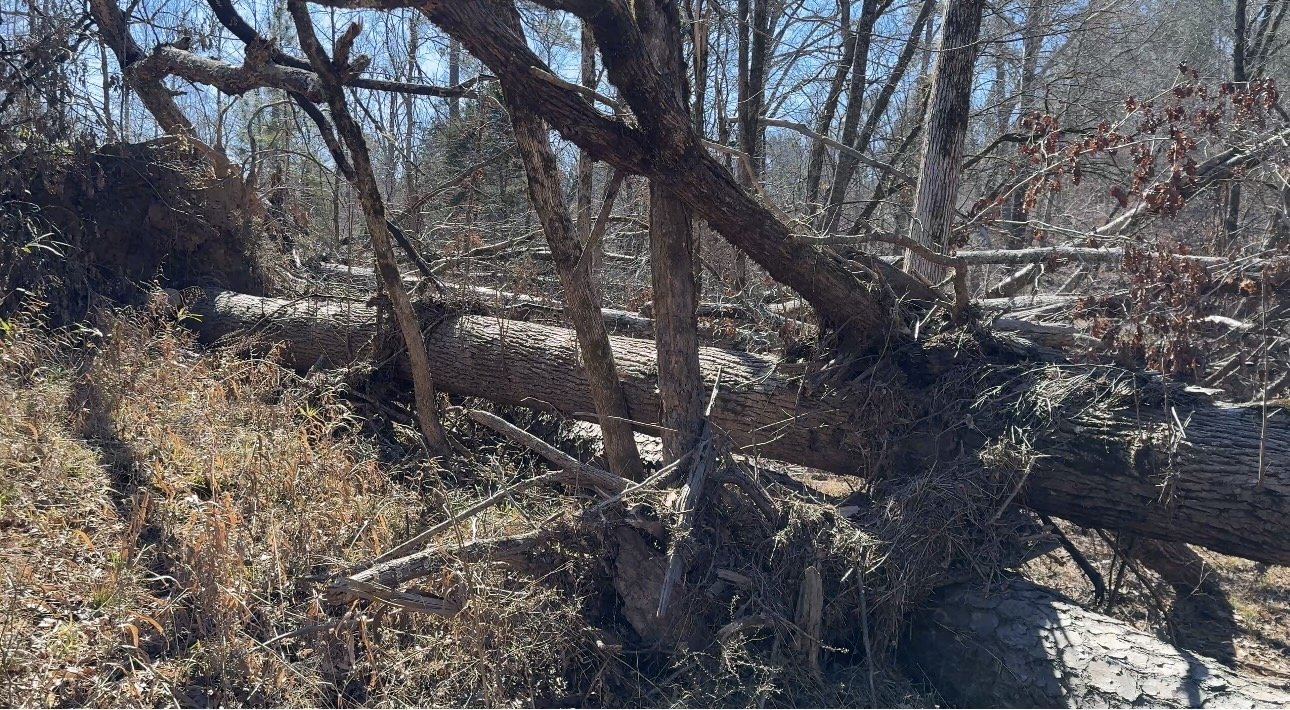
Downed trees after Helene
Just Making the Deadline
After learning about EFRP, I quickly realized there was an application deadline approaching. I worked to gather the necessary documentation and managed to submit everything to our local FSA office just in time.
Anyone who has dealt with government paperwork knows it can take time to gather the required documents, so I was grateful to be able to get everything submitted before the deadline.
What Happens After You Apply
Once an application is submitted, the next step is a visit from someone through the Farm Service Agency who comes out to the property to evaluate the storm damage.
During this assessment they look at things like:
Downed or damaged trees
Areas where forest stands were significantly impacted
Roadways or trails that may be blocked by fallen trees
Debris that needs to be removed to restore access and forest health
This visit helps determine the extent of the damage and what types of restoration work may qualify under the program.
Cost-Share Assistance for Cleanup
If the damage qualifies, the Emergency Forest Restoration Program may provide cost-share assistance for the cleanup and restoration work.
This can include removing damaged trees or cutting them in place so the area can safely recover.
Landowners can document their cleanup work in a couple of ways:
Submitting receipts if contractors or equipment are hired
Providing a worksheet documenting the hours personally spent cleaning up damaged areas
This flexibility allows landowners to complete the work themselves if they choose. Our cost-share was up to 75% of the clean up cost.
Two Years to Complete the Work
One aspect of the program that is particularly helpful is the timeline. In our case, we have two years to complete the cleanup and restoration work related to the storm damage.
For larger properties, this makes a big difference. Assessing the land, planning cleanup, and safely working through wooded areas is a process that takes time.
Sharing the Information for Other Landowners
Before this experience, I had never heard of the Emergency Forest Restoration Program. It was only through a conversation with our forester that I learned the program existed.
If you are a landowner whose forest land was impacted by a natural disaster, it may be worth reaching out to your local Farm Service Agency office to learn more about programs that may be available.
Storms are part of life in the Southeast, but programs like this can help landowners restore damaged forests and continue caring for the land for years to come.
For the most up-to-date information about eligibility and application requirements, check the USDA FSA Emergency Forest Restoration Program page ➜
About the Author
Erika Rogers is the founder of The Heritage Farm at Stevens Creek, The Folk School, and Little Folk Forest School. An artist, illustrator, entrepreneur, and lifelong student of traditional skills, she is passionate about preserving folk traditions, heritage livestock, artisan trades, storytelling, and hands-on knowledge for future generations. Through The Heritage Farm, she is working to create a place where people of all ages can gather to learn, connect, and carry forward the skills and traditions that shaped the generations before us.